Navigating Senior Downsizing and Severe Clutter Without the Overwhelm
For most families, a home isn’t just a physical structure made of wood and glass; it is a living museum of a life well-lived. It holds the echo of holiday dinners, the height markers on the doorframe, and decades of accumulated treasures. Whether you are an adult child trying to gently guide an aging parent through a life transition, or a senior preparing for your own next chapter, the mere thought of sorting through a lifetime of memories can trigger instant, debilitating paralysis.
When you add severe clutter or hoarding tendencies to the mix, the physical and emotional toll can feel entirely insurmountable. You aren't just moving cardboard boxes—you are navigating complex grief, profound nostalgia, and deep anxiety. If you are looking for senior downsizing assistance in the Bay Area, the most important tool you need isn't a roll-off dumpster, a color-coded packing checklist, or a strict timeline. The most essential tool is compassion.
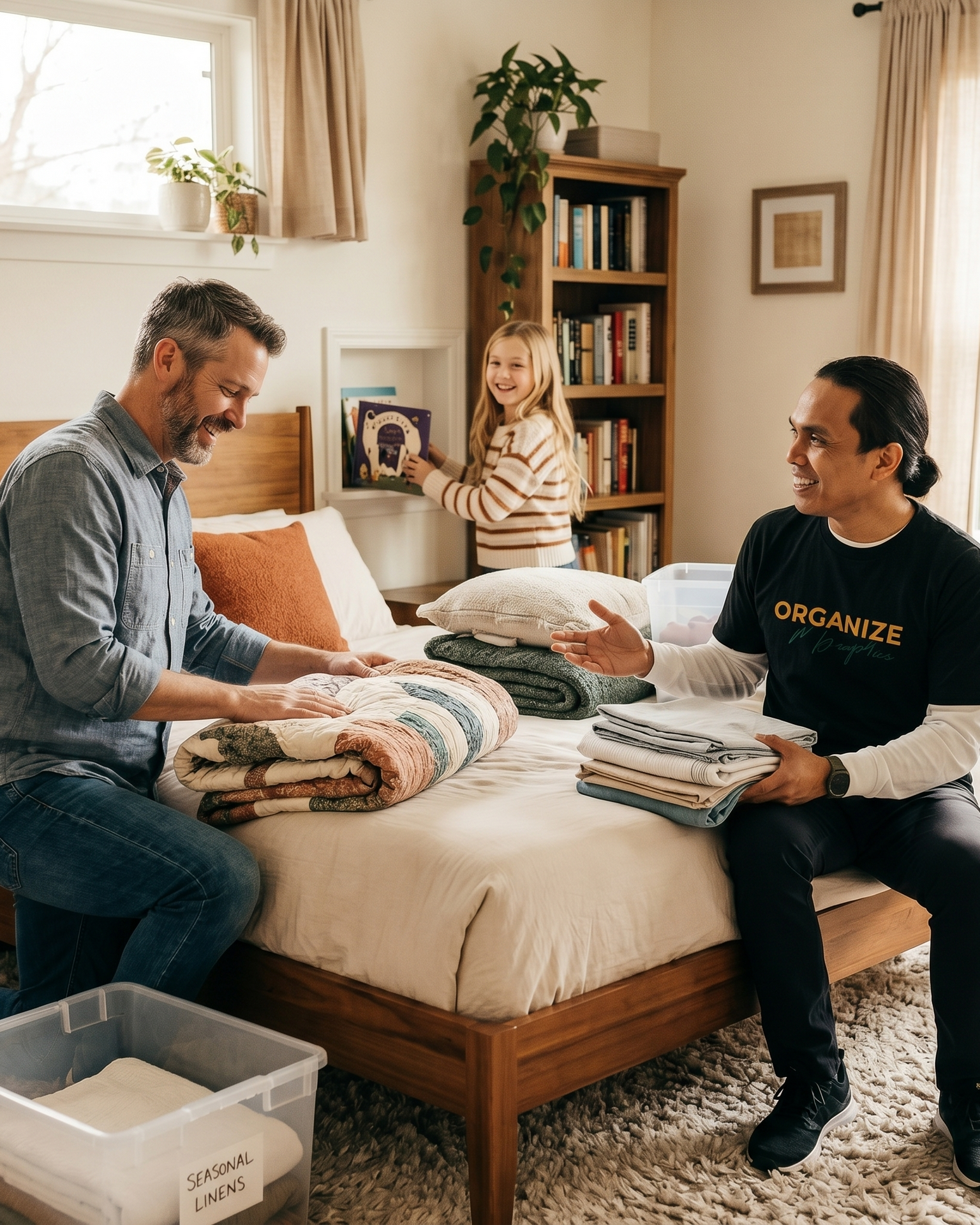
Here is an inside look at how Ari and I approach the delicate, deeply personal process of downsizing and decluttering. Our mission is to ensure that our clients feel supported, heard, and completely free of judgment at every single step of the journey.
The Heavy Emotional Toll of Decades of Accumulation
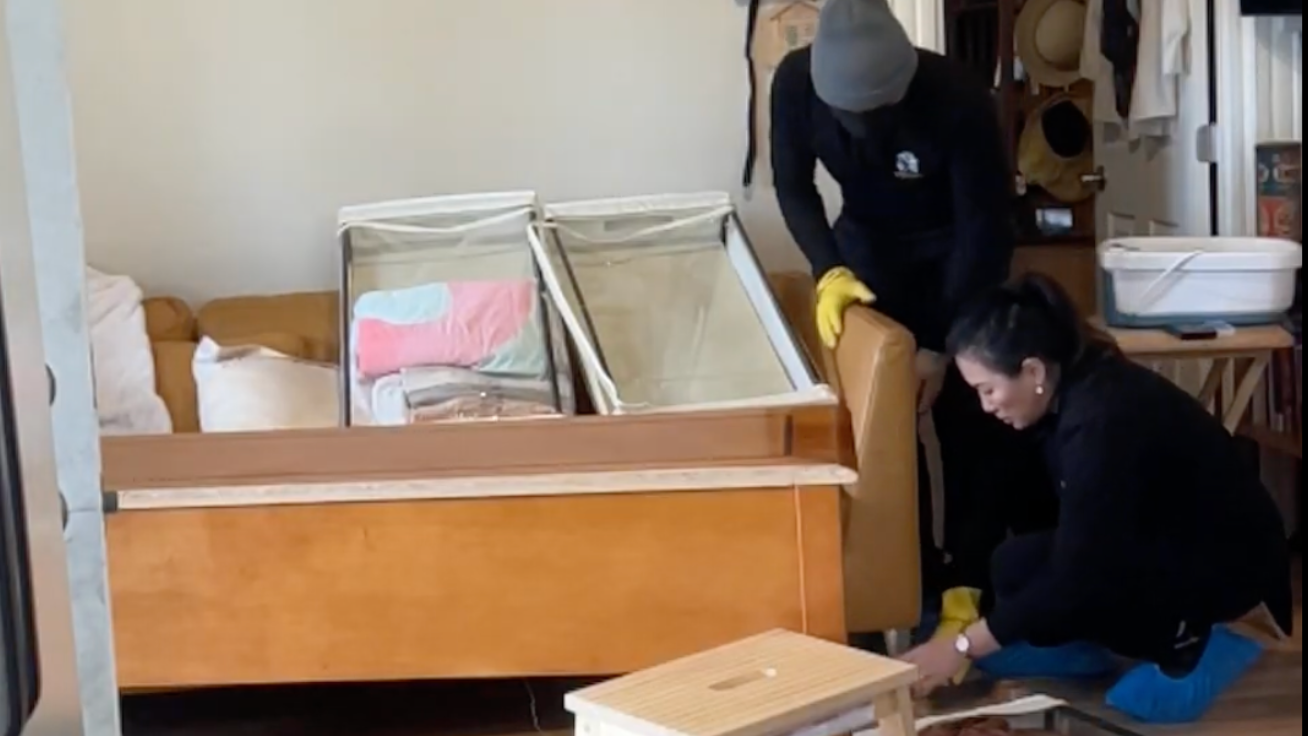
Living in the Bay Area often means families have stayed in the same home for thirty, forty, or even fifty years. When you stay in one place for that long, the sheer volume of "life" that accumulates is staggering. Basements, attics, and spare bedrooms slowly transform into storage units for the past.
When it comes time to move—whether due to health concerns, the desire for a safer single-story layout, or moving into a senior living community—the realization of how much stuff is in the house can be shocking. For many seniors, looking at these items brings up a profound fear of losing their identity. For their adult children, it brings up overwhelm and, frequently, frustration. This is where professional, empathetic intervention changes the entire trajectory of the move.

Why a Compassionate, Non-Judgmental Approach is Everything
There is a profound, terrifying vulnerability in letting a stranger into your home, especially when things have gotten out of hand. Often, clients who reach out to us for compassionate hoarding help in the East Bay have been hiding their living situation from friends, neighbors, and even their own families or aren’t aware of the severity of the situation, or just haven’t known how to let go of certain items.
- Judgment is the absolute enemy of progress. When Ari and I step through a front door, we do not see a "mess." We see a lifetime of decisions, delayed actions, and deep attachments. A compassionate approach is crucial for several fundamental reasons:
- Builds immediate, foundational trust: Clients need to know they are safe with us. If they feel criticized, rushed, or judged, they will immediately put up defensive walls and hold onto their items even tighter.
- Validates the emotion behind the object: A stack of old magazines or a broken toaster might look like obvious trash to an outsider. But to a client, it might represent a connection to a specific era, a frugal mindset instilled during childhood, or a fear of losing important information. We validate those underlying feelings rather than dismissing the item itself.
- Prevents lasting trauma: Forced cleanouts—where family members swoop in and throw everything away without consent—rarely work in the long term and cause deep psychological distress. We move at the speed of trust, ensuring the client remains in the driver's seat of their own life.

The Very First "Baby Step" to Break the Paralysis
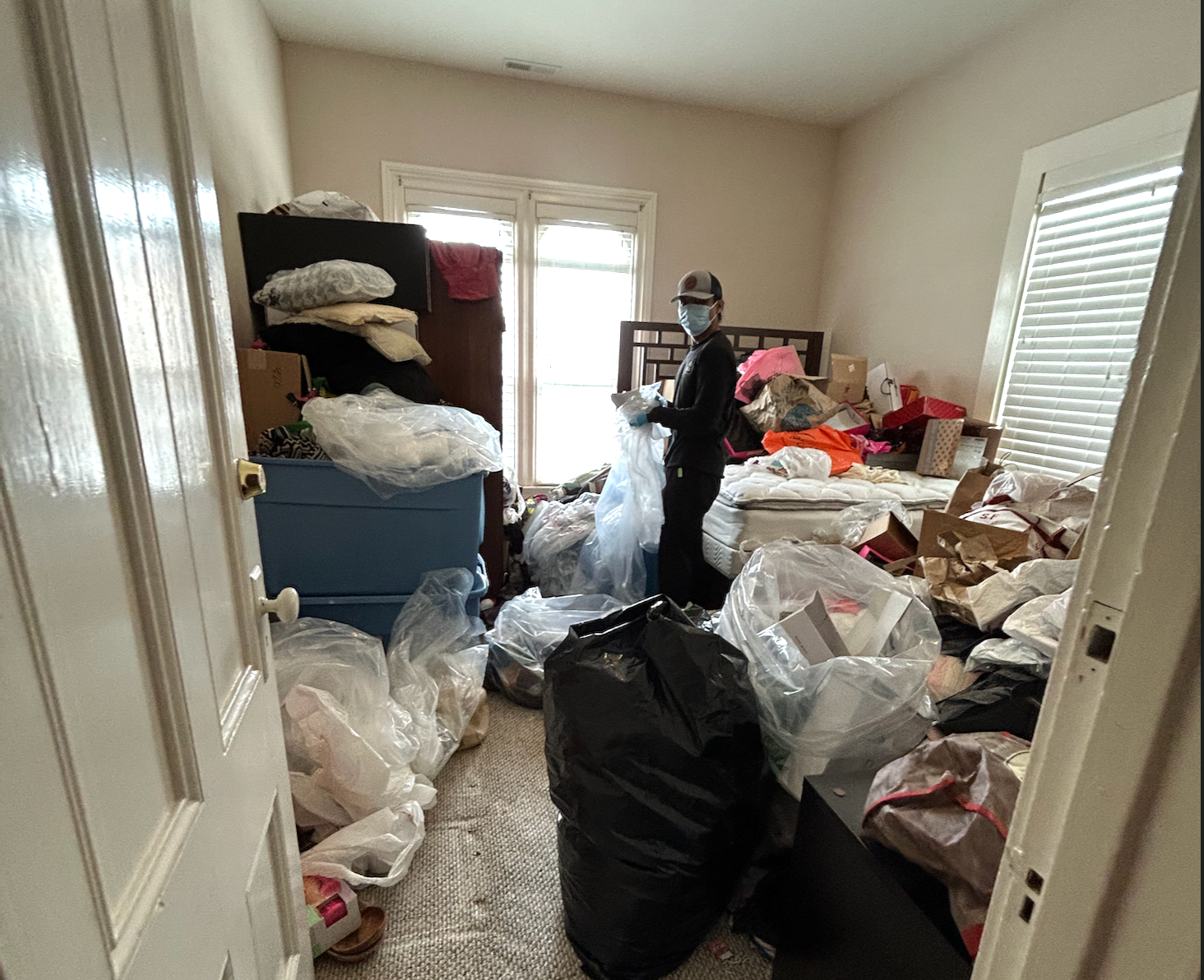
When a client is completely overwhelmed by the sheer volume of their belongings, looking at the "big picture" is a guaranteed recipe for a panic attack. When you look at an entire house packed to the ceiling, the brain simply shorts out. It triggers a "fight or flight" response, and most people choose "flight"—meaning they walk out of the room and avoid the project for another year.
When Ari and I walk into a severely cluttered space, we explicitly ban any talk about "the whole house." Instead, we shrink the world down to a single, hyper-manageable micro-step.
Our very first baby step: We clear a 3x3 foot "safe zone."
- We pick one micro-surface: It might be the center of the kitchen table, a single armchair, or just a small square of the living room floor near a window.
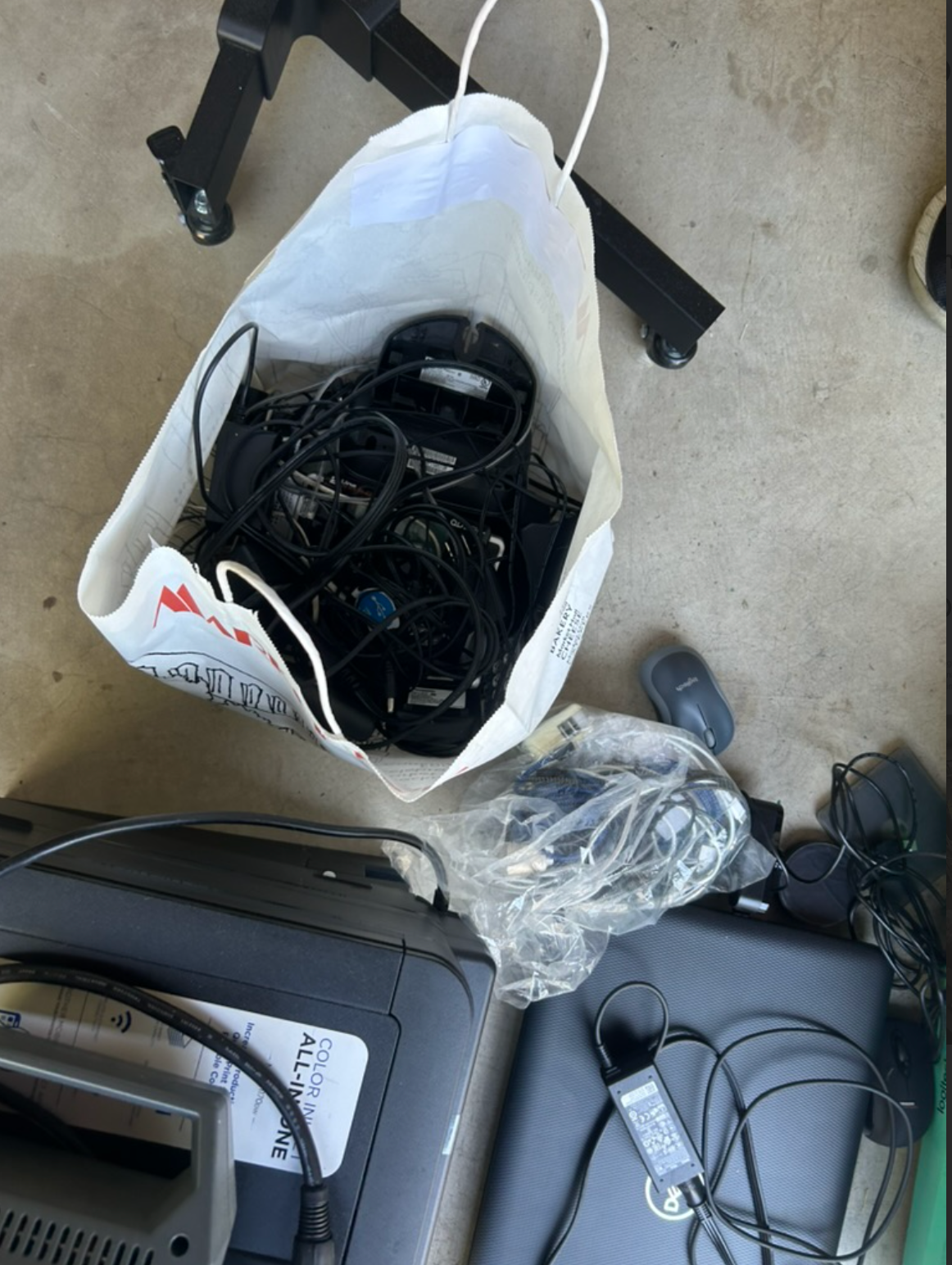
- We focus exclusively on easy wins: We start with items that carry zero emotional weight. We look for obvious trash, expired mail, or broken items. There are no hard decisions made in the first hour.
- We celebrate the visible progress: Clearing just one small area proves to the client that progress is actually possible. It gives their brain a resting place. Seeing the beautiful wood of a dining table that has been buried for five years provides a powerful visual representation of what the rest of the home can look like.
Action cures fear. By focusing on just one tiny corner, the mental paralysis begins to melt away, replaced by momentum.
Shifting the Mindset: From "Losing" to "Gaining"
The absolute hardest part of transitioning to a smaller home isn't the physical packing, the heavy lifting, or the logistics of the moving truck. It is the mental hurdle. Many seniors feel like downsizing means erasing their past, losing their independence, or admitting defeat.
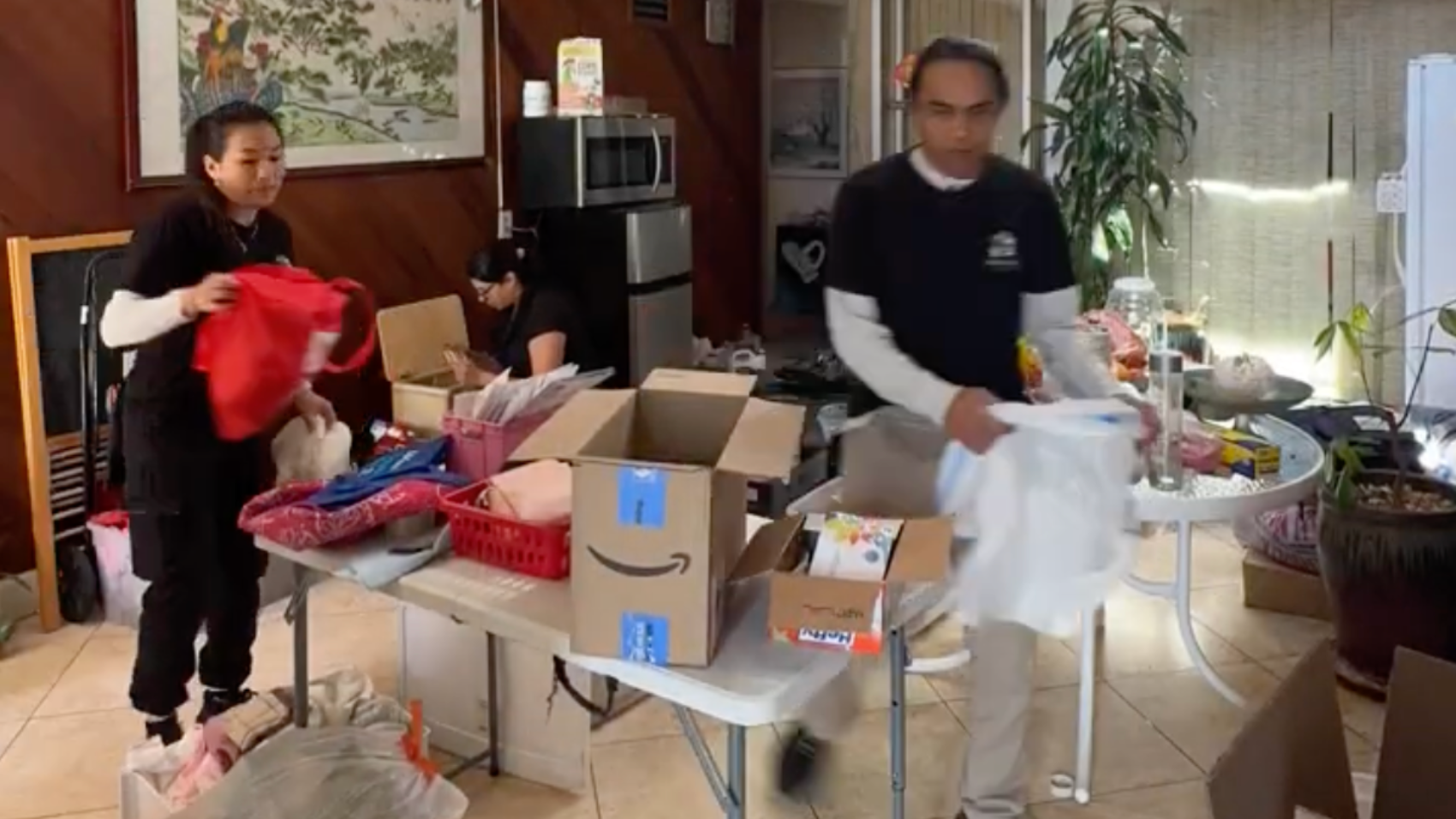
Ari and I actively work alongside our clients to flip this narrative. We guide them through a gentle, ongoing mental shift from "losing my things" to "gaining a fresh start."
How We Create the Mental Shift:
- The Museum Analogy (Curating the Best): We frequently ask, "If your new home is a museum of your life, what are the absolute best, most beautiful pieces we should put on display?" This completely changes the focus. Instead of focusing on what we are throwing away, we focus on what we are honoring, keeping, and highlighting.
- Focusing on the Future Lifestyle: We talk about the tangible benefits of their new space. Less square footage means significantly less cleaning, lower utility bills, and fewer tripping hazards. It means more time for family, hobbies, relaxation, and actually enjoying life rather than managing an inventory of objects.
- Giving Items a Beautiful Second Life: It is incredibly difficult to let go of a beloved dining set, a collection of vintage books, or pristine cookware if the client thinks it is going into a landfill. We facilitate meaningful donations to local Bay Area charities. Knowing their cherished items are going to a young family starting out or someone in need completely reframes the process, easing the guilt of letting go.
When to DIY vs. When to Hire Professional Support
While some families are able to tackle a downsizing project over a few weekends with some pizza and coffee, it often becomes a battleground of stress, resentment, and strained relationships. Knowing when to bring in objective, compassionate professionals can save your family dynamic.
When DIY Makes Sense:
- The home is already generally organized and well-maintained.
- The senior is physically active, cognitively sharp, and emotionally ready to part with items.
- Adult children live nearby, have clear communication with their parents, and possess plenty of free time on weekends.
When to Hire Professional Organizers:
- Safety Hazards: The volume of belongings is causing fall hazards, blocking exits, or indicating severe anxiety and hoarding tendencies.
- Logistical Nightmares: Adult children live out of state, work demanding full-time jobs, or simply cannot manage the immense physical and logistical burden of an estate clear-out.
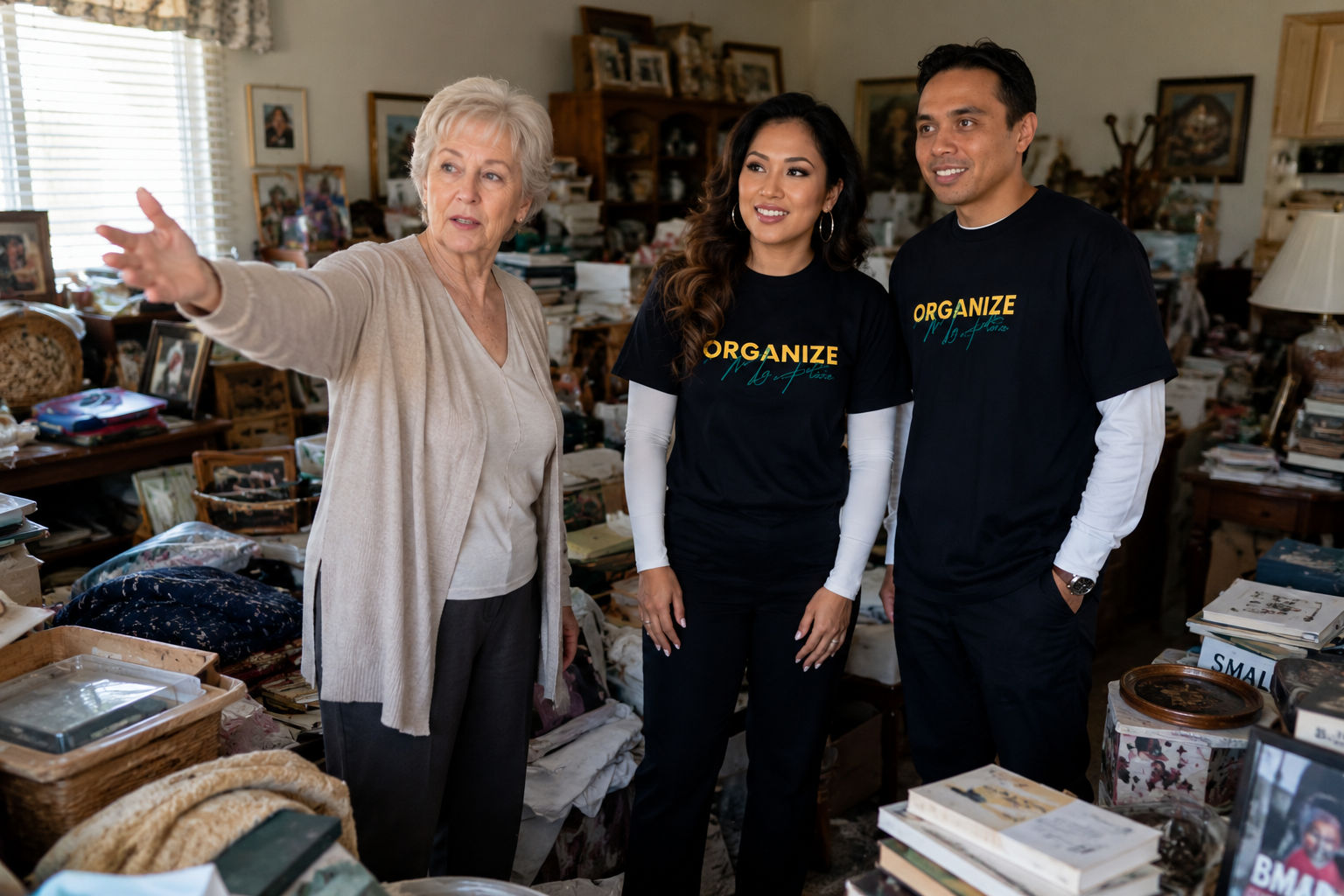
- Emotional Gridlock: The sorting process is causing arguments, tears, or total standstills. A neutral third party (like us) removes the family baggage from the equation. We don't have decades of family history, so we can guide the process objectively and peacefully.

Take the Next Step Toward Peace of Mind in the Bay Area
Downsizing a home in Oakland, Berkeley, Walnut Creek, or anywhere in the Bay Area does not have to be a painful, chaotic, or traumatizing experience. With the right support system in place, it can be a deeply healing, liberating transition into a beautifully curated next chapter.
If you or a loved one are facing a major transition, feeling paralyzed by clutter, and simply don't know where to start, please know that you do not have to do it alone.
Reach out at jess@organizemyplace.com or call 530 407 5275 or book a call back here to learn more.
Proudly Serving:
Oakland | Berkeley | Walnut Creek | Lafayette | Orinda | Moraga | Alameda | Piedmont | Danville | San Ramon | Pleasant Hill | Concord | San Leandro | and surrounding East Bay communities, I San Francisco, I South Bay and Peninsula.